Robert Moses Parks
In 1914, Robert Moses stood along Riverside Drive on the west side of Manhattan looking out across a barren patch of grass and mud toward the Hudson River. The barren patches bordered the freight tracks of the New York Central Railroad. There was no way to get across the tracks to the river. This was the beginning of Moses’ vision for highways and parks in the city. As he stood there pondering the landscape before him, he dreamed of a magnificent park and a highway running along side the river, rather than railroad tracks.
Robert Moses became New York City Parks Commissioner in 1934 under the direction of Mayor Fiorello LaGuardia, having lobbied for a single authority to have control of the parks in New York City. LaGuardia was also eager to beuatify his beloved city. Until then, each borough had its own parks commissioner. From the beginning of his tenure, Robert Moses had a huge impact on creating and renovating parks.
Having spent the last 20 years creating parks on Long Island, Robert Moses was eager to get started on creating and renovating parks in New York City. He had already drawn up preliminary ideas, but needed blueprints. In 1934, half af all engineers and six out of seven architects were looking for work. Moses sent out telegrams to engineers and architects across New York State. On January 28, 1934 a line of men waiting for an opportunity to work stretched along Fifth Avenue from the Arsenal, at the 64th Street entrance to Central Park, to 72nd Street. Moses needed blueprints completed immediately and hired 600 of those waiting. Under the public works act, he was able to hire thousands more laborers to do the heavy lifting.
By the beginning of May, 1,700 of the 1,800 renovation projects had been completed. Walkways were repaved. Drinking fountains were repaired. New trees, shrubs, and flowers were planted on plots that for years were just patches of dirt and weeds. All the playgrounds had been resurfaced with asphalt, rather than cinder, and new equipment had been installed. Benches around the parks had been reslatted and painted. Shade trees had been planted alongside benches, particularly in playgrounds. Monuments had been cleaned and repaired.
By midsummer, new construction was being completed in several parks. The Prospect Park Zoo in Brooklyn was being rebuilt and a new zoo was being built at Barrett Park in Staten Island. Complete reconstruction jobs had been completed at: St, James, Crotona and Macombs Dam parks in The Bronx; Owl’s Head, McCarren and Fort Greene parks in Brooklyn; Crocheron, Chisolm, and Kissena parks in Queens; Mount Morris, Manhattan Square, and Carl Shurz parks in Manhattan.
The weed filled lot at Bryant Park had been transformed into a formal garden with lush green lawns, trees shrubs, and flower beds. The four acres space was surrounded by new flagstone walkways. Bryant Park, located behind the New York Public Library between 42 and 40th streets on 6th Avenue, remains a wonderful oasis in Midtown Manhattan.
In Central Park, the Shakespeare garden had been replanted. The Great Lawn had been created in what was once a shanty town. The sheep were gone from what is now Sheep Meadow. The building that was once a casino run by Tammany Hall cronies was now a restaurant called Tavern on The Green. By December, the Central Park zoo had been completely rebuilt and large animals had been moved to other zoos in the city.
In addition to renovating existing parks, Moses was creating new ones. He acquired spaces near bridges, vacant lots, triangles where streets met, and small bits of land left over from street widening projects. At an area bordering Christie and Forsyth Streets on the Lower East Side of Manhattan, he acquired the land that had originally been set aside for a new housing development to replace some of the tenement buildings that were prominent in the neighborhood. That space is now Sara Delano Roosevelt Park.
In 1934, there were 119 playgrounds in the city. By 1960, there were 777. Robert Moses resigned as NYC Parks Commissioner in 1968, but his legacy of park development lives on. Today, the NYC Department of Parks and Recreation manages more than 1,700 parks, playgrounds, and recreational facilities. The parks offer a welcome respite from life in the city.
Source: Caro, Robert. The Power Broker: Robert Moses and the Fall of New York. Vintage Books, 1974, pp. 368-376
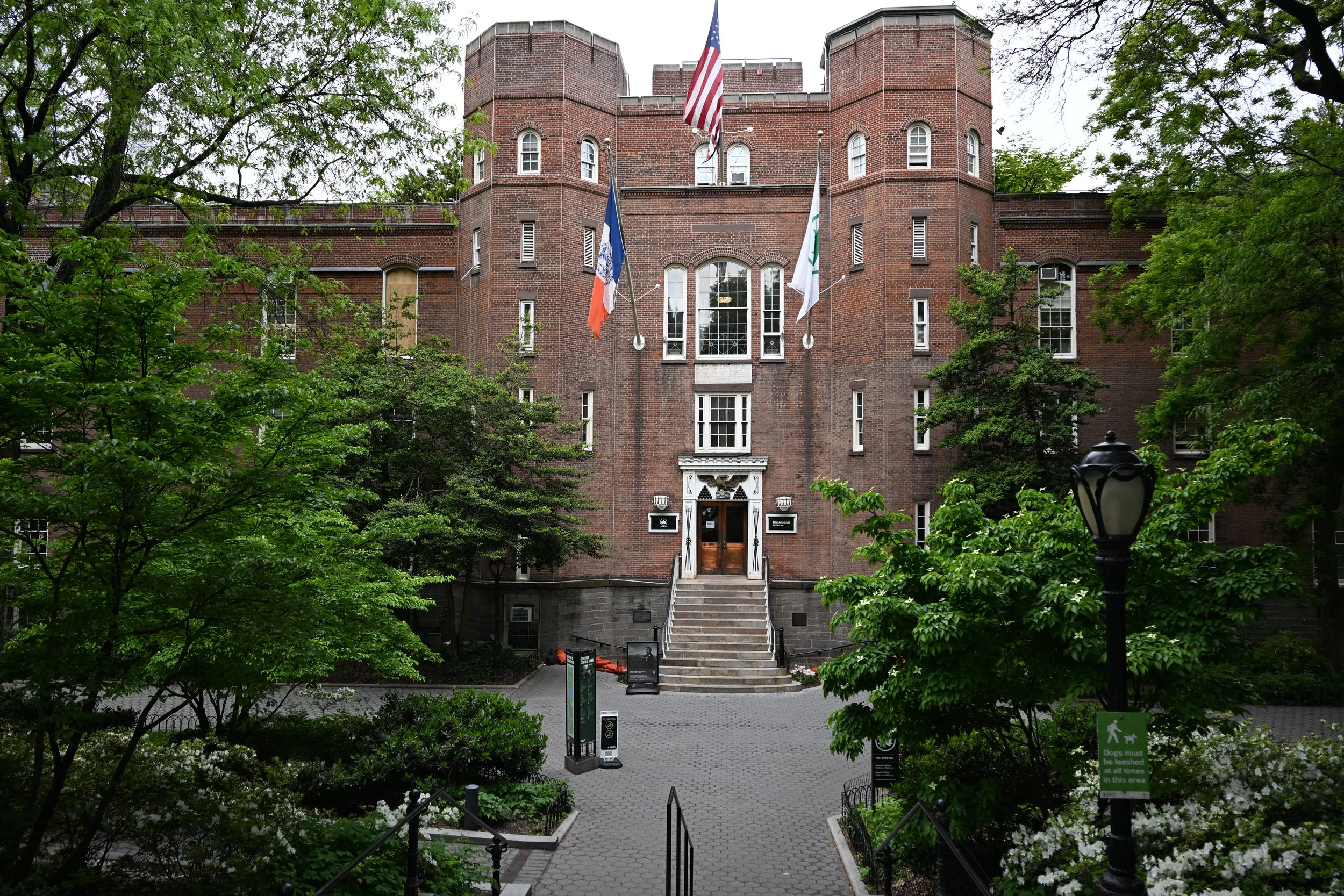
The Arsenal at the 64th Street Central Park Entrance is the headquarters for the NYC Department of Parks and Recreation.
Robert Moses built or renovated the following parks:
Manhattan
Highbridge Park
Mount Morris Park
Corleas Hook Park
Riverside Park
Central Park
Bryant Park
Randalls Island
The Bronx
Ferry Point Park
Soundview Park
Crotona Park
Orchard Beach
Pelham Bay Park
St. James Park
Queens
Rockaway Beach Park
Flushing Meadows Park
Astoria Park
Jacob Riis Park
Chisolm
Crocheron
Kissena
Brooklyn
McCarren Park
Canarsie Park
Prospect Park
Owl’s Head
Fort Greene
Staten Island
Barrett Park